Thursday, May 29, 2014

Cradle to Grave

In the final decade of the 1800's, George Vanderbilt hired Carl Schenck to restore the over logged predecessor of todays Pisgah National Forrest in Western North Carolina.  At the turn of the century my great-great-grandmother rode a buck-board wagon along the banks of the Davidson River and Looking Glass Creek with Carl Schenck to a cabin that's still standing at the site of America's first school of forestry.  Schenck wrote that my great-great-grandmother made dry biscuits. My great-grandmother vehemently denied this dry biscuit accusation, and defended her mother's baking till the end of her life. I love my family, but sadly, we make dry biscuits. There are stories, memories, and legends that surround the forest that envelopes that old cabin, and I am forever connected to the land there.

A boggy, rhododendron choked, flat piece of land called the Pink Beds sits at high elevation surrounded by some of the highest peaks on the East side of the Mississippi.  This area lies adjacent to the old forestry school which is now dubbed the Cradle of Forestry. It's here where one can find the beaver pond laden head waters of the South Mills River. From these ponds, the river meanders and falls for over 13 miles through a section of roadless Pisgah Forest.  It's one of the longest remote sections of sizable stream in all of Western North Carolina.  My son is named Mills after this river that my ancestors lived on, and a loyalist named William Mills was one of the first land owning white men to settle in the near by area.  When William Mills settled on stolen Cherokee land, brook trout likely filled the Mills River. Today, it's the wild bows and browns that beckon me to the banks of the South Mills, and my last trip for the foreseeable future was a fitting one.

My family and I are moving to Oklahoma this summer, you know, the trout Mecca of the Northern Hemisphere. Though I know we will be back to visit, I doubt I'll have time to trek up to the Pink Beds and hike into to the remote haunts of the Mills.  When my wife signed up for an eighteen mile trail run, the  Cradle to Grave 30K,  that started in the Cradle of Forestry, I quickly made plans to be her cheerleader. I would be a cheerleader in wet waders with a graphite stick and a ten foot leader, but I would cheer her on, nonetheless. The Saturday of her race I parked at the gauging station on the upper South Mills that doubled as nutrition station in her trail race.  I waited for my fit wife, Blair,  to tear through this section of the course so I could shout affirmation her way, as she set out to accomplish something all together inspiring. When she passed and faded into the forest away from the river,  I pointed my rod tip to the trail, left the road, and made haste downstream for the Otter Hole.

The Otter Hole has been captured in the HD video of my mind for nearly thirty years. When I was eleven years old, my father took me on my first back packing trip. We parked in the same gauging station gravel lot that I find my self parked in decades later.  Lugging our fly rod laden packs, we began our hike as dusk drew near. I had heard about the Otter Hole, and as we stopped to observe it a short fifteen minutes down the trail, the water was boiling with rises. Simply boiling. My eleven year old pleas to unsheathe our fly rods for a moments fishing were turned away by the three adults in our crew due to the waning light and many miles left to hike.


My tween self on the South Mills near Wolf Ford circa 1988

My fishing excursions on the South Mills have never lived up to the potential evidenced in the countless trout I saw rising on that April evening in the late 80's. I have caught many fish on the Mills,  but I've never had a high numbers day or a trophy fish to hand. The river is both beautiful and baffling to those who fish it. Still, the mystery of what those cold, slightly tannic colored waters hold keep me curiously optimistic.

On my wife's race day, I hike in and enter the steam just below the tail-out of the Otter Hole.  Looking upstream, the river takes a ninety degree turn to the right, but contrary to most bends, the strongest current hugs the inside bank. A massive nearly motionless eddy forms across the majority of space the river swallows, and stretches nearly four times the normal width of stream on the outside of the bend. I don't know how to fish it. Would there be fish over in the seemingly stagnant spans of water? How could I approach the slick with out sending waves across the surface, putting down every fish between the tangled flora lined river banks. My mind runs replays of the expanding concentric circles that manifested all over the waters surface as trout after trout swallowed mayflies before my fish thirsty eleven year old eyes years ago in this very spot. This morning the surface remains unbroken, so I concentrate on the seam of the steady moving current inside the bend, fishing two flies beneath an indicator.

The Otter Hole

Neither I or my father really knew what a nymph was thirty years ago, much less how to fish one. Our fly repertoire consisted of an elk hair caddis, or a adams, or an elk hair caddis.  When those didn't produce, we would try an elk hair caddis.  I pluck two small bows out of the run, then my line tightens firmly on my next hook set. I smile and chuckle out loud. This is why I've come to the Mills River. The fish I land is not a river monster, only a 12 inch rainbow. However, a twelve inch wild rainbow is a larger than average wild trout in the North Carolina mountains, and it gives me hope that a fourteen inch, eighteen inch, or even twenty plus inch fish swims these waters. So I get a little over optimistic at times. Glass half full people. If I don't catch another fish all day, I'm satisfied.

I was only on the water two and a half hours. I'm not sure how many fish I landed. It wasn't prolific by any means. I saw mayflies, caddis flies, big adult stone flies, and tons of midges. I switched to a lone royal wolf and managed a small fish on top water, and then missed at least six solid strikes from two sizable fish on a size ten stimulator in my last hole.

Pinstriped Rainbow


Walking back to the car, I wasn't certain if I would ever lay eyes on this section of stream again. I have only made it to the gauging station entrance of the South Mills maybe six times total in my life, but the stream remains the most defining, iconic, and meaningful Blue Ridge trout stream I know. I am very aware that when the Cherokee inhabited this land, the rainbows and big browns I seek did not exist in this stream. I wonder what the Cherokee called the South Mills? I wonder how big the brook trout were in 1000 A.D.?  White loggers introduced the rainbows and browns in the 1800's, and those species quickly dominated its waters, forcing the brookies high into the headwaters, where they rarely grow over 7 inches.

As with many rivers, the Mills will most likely only yield smaller and fewer fish as the years pass.  There are no dams to hinder spawning, no major erosion issues or development upstream dirtying it's waters, but acid rain, rising temperatures, and increased global population and pressure take there toll yearly.  I found my I-phone vibrating from an incoming call as I stood thigh deep in the cold waters of this wilderness stream, confirming that our wild spaces are being altered in ways that rob us of their solace. One day, when my son is old enough to wield a fly rod, I hope to take him to his namesake's stream; a steam steeped in intimate history and protected far greater than many of Earth's other streams. Will there be any trout left in the South Mills when we return? Will my son look over countless rising trout in the Otter Hole before watching one sip his dry fly and make his rod bend? Will he ever lay eyes on those head waters at all? I hope yes will be the answer to all of the above. Remember, I am a hopeless optimist. I live plying the waters in the paradox my hopeless optimism creates.

My son Mills and his brown trout birthday cake

Saturday, May 3, 2014

Leroy's Army and the Carolina Four

Fresh snow on two fourteeners.  Shavano to the left and Antero to the right.

If anyone looked in my car on Sunday, April 25 they would have found a slim suit, a box of My Little Ponies, two whips, notes for a wedding ceremony, a few copies of The Drake, Old Testament commentaries, overalls, and a small arsenal of fly fishing gear. I even think I'm weird with that laundry list of randomness. "My life be like ewww-ahhh." When they weighed my bag at the ticket counter of the airport, it was three pounds overweight. I stuffed my waders in my computer bag and carried my wading boots by hand through the airport and connecting flights.  As I walked amongst the kaleidoscope of humanity that noisley fills the terminals of our nations airports, I could still hear bad, bad, Leroy Brown softly beckoning me 1600 miles away.

A continuing education class on the Old Testament lead me to the banks of the Arkansas near Buena Vista, Colorado. It was in this very class that I learned the true nature of the Song of Songs. It turns out it's not about fishing.  The Hebrew poetry is actually about intimate human love.  Who knew? All this time I thought it was scripture concerning the Beloved trout and the ever pursuant Lover, A.K.A. the fly angler. As I was educated throughout the week, my fishing hopes rested in a class-free Wednesday afternoon we had been afforded off.

Sloan-dog-millionaire
Braden works at ArkAnglers in BV. He's a heck of a guy. He helped me understand the bi-polar formula of the Arkansas river in Spring through my countless pre-trip phone calls to the shop.  It's a formula of run-off, plus snowpack, minus sunlight, divided by fly choice, multiplied by the square root of caddis larva, over fluorocarbon tippet squared.  Pretty straight forward stuff really.  After we arrived, Braden proved to be even more flippin' awesome than previously expected. He pointed us 1,000 vertical feet down stream for our Wednesday afternoon assault, hoping for warmer water and blue winged olives to boot.

As we pulled off the highway and parked riverside, we looked fiercely intimidating. If birds could talk, and fish spoke fowl, the ravens would have cried out to the trout "Swim, swim for your lives!," as soon as our tires touched stream side gravel. Nothing is more intimidating than four men ridin' dirty in a mini-van and a Hyundai Senata.  That's Mad Max kind of scary.  A modern day cast of the 3 Amigos scrambled down the bank of the river with a firm grip on the cork, and the realization that this version of the 3 Amigo's had a fourth.  Eric, Matt, Brian, and myself. The Carolina 4. Famous no where. Feared by rental cars everywhere.

The water was up three times what is desired and a little stained. The plan was to focus on the seams of the soft water and stay close to the banks with a cocktail of golden stones and mayfly nymphs to start. Lines hit water, indicators bounced, and soon the turbulent Ark rendered up some of the wild browns she is infamous for.  The fishing was never lights out, but it felt like fishing. Real fishing.  Not the repeatedly-casting-over-educated-tail-water-trout, or the trying-to-figure-out-where-they-put-the-last-truck-load-of-stockers, kind of fishing. Rather, it was the working-fishy-looking-water-and-feeding-wild-trout-imitations-of-not-so-tiny-aquatic-bugs kind of fishing. Every cast felt as if it could produce a fish, and the anticipation of an over 20 inch brown never seemed far from the realm of possibility. Real. Wild. Trout. All of this in a setting fit for epic adventure and beauty...or the set of the 4 Amigos. The two settings are synonymous really.

Leroy has saucers for pec fins
The fishing didn't come easy, and that was part of what made it feel so right.  The BWO's never blanketed the water, and I nary saw a rise all afternoon.  The stomachs I pumped showed a small variety of midges, caddis, and mayfly nymphs, and confirmed that fish weren't gorging themselves on BWO emergers. Or gorging on anything for that matter. Sadly, we did have to call in a search party after fishing. The search party was for my phone. Found it. #merica

A short drive to K's produced a greasy burger to-go before another class on the Kitubim wisdom literature. My belly was full on burger, and my mind was content knowing we could have filled our bellies on trout that night if we needed the sustenance. The 4 Amigo's practice catch-and -release... for the most part.  Ole!

hashtag no filter
A free stone stream, a nymph box, and a little Blue Winged Olive


Leroy


Sunrise over an elk herd


Monday, March 10, 2014

Strike Indicators - reviews and scenarios


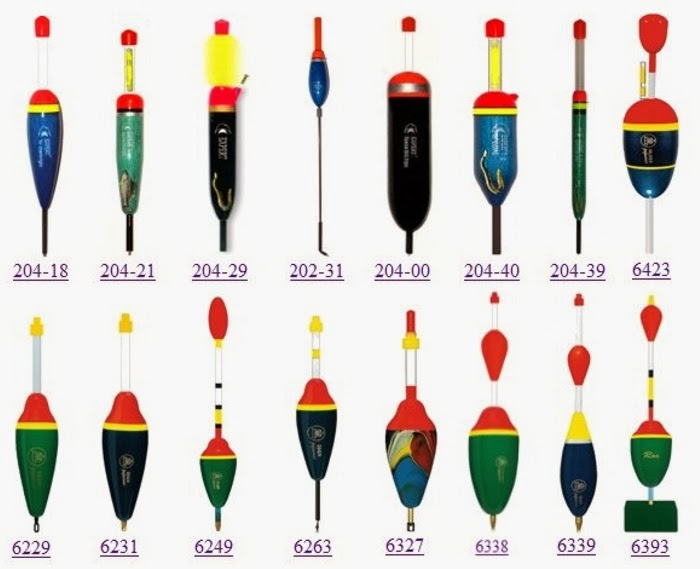
Bobbers. That's what strike indicators truly are. However, in the hierarchical flavor of many pretentious fly guys, the term "bobber" is reserved for the bait fishing basement dwellers of angling society and the pompous flingers of fur and feathers refer to the baby bobber as a strike indicator. This blog entry is intended to review different styles of strike indicators, cover some basic strike indicator placement, and to stop bobber bigotry. Bobbers are strike indicators too.

Just add batteries for night time brown poaching


What Indicators to Avoid... like for real, don't use these
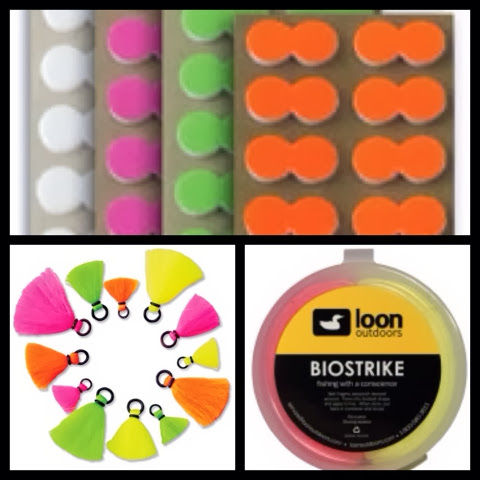
Personally I feel that putty indicators, sticker indicators, and big yarn indicators with rubber o-rings all suck.
Not my favs. Clockwise from the top: Stickers, putty, o-ring yarn.

Putty leaves residue on your leader, doesn't float well, and doesn't work as well in the cold when you are most apt to use an indicator/bobber/nibble detector/eat-meter.

Sticker Indicators are wind resistant and cause drag when casting, leave sticky residue on your leader, and don't float well. Burn 'em.

Yarn Indicators with rubber o-rings are also very wind resistant and hard to keep floating.  Too much silicone applied to them and they sink from the weight of the silicone and rubber o-ring. Too little silicone and they sink from water absorption.


My 3 favorite Strike Indicators ... (money makers) 
My go to strike indicators are Lightning Strike football indicators, Thing-a-ma-bobbers, and Lefty Kreh's indicator yarn. None of these are perfect, hence the reason I have three favorites. I use these in different scenarios.


I likes the white footballs for their bubble camo qualities
Lightning Strike Football Indicators are the indicator I fish the most often. Most of my fishing is for wily wild trout or over-pressured big trout.  I only use the small white one. I think these small white football indicators spook less fish when they hit the water and are more apt to look like a air bubble when they float over the head of picky fish. The best thing about these indicators is that you can slide them up and down your leader to adjust for depth without taking it off or kinking your leader, making these little indicators worth their weight in wood duck flank feathers.  This bitty bobber is not invincible though. The small ones don't float great with heavy nymphs or strong currents. Also, the white air bubble theory works reverse on the fisherman, because it can be harder to see than the fluorescent glowing beacon indicators out there.  They can also be a little tricky to get on your leader; like wrasslin a greased pig.

the industry standard fly bobber
Thingamabobber embraced the obvious about 10 years ago when their products stormed the market
and became the industry standard for fly fishing bobbers by calling a spade a spade. As it's name suggests, it's a bobber people. These things float high and they are easy to see and easy to use. Nuff said. Although these bright balls aren't aerodynamic, their heft allows them to punch through the air better than their light but clumsy yarn counterparts.  If you get the bright colored ones, nothing is easier to see on the water. The kryptonite for the Thingamabobber is that it's loud to hit the water, can be easy to spot by educated trout who have previously felt the sting of a hook after watching the popular Thingamabobber float by, and they leave a sharp kink in your leader when you take them off or move them.  I like to use these indicators when teaching people to nymph, fishing stocked trout with mush for brains, or when fishing deep water that needs and indicator to float high and keep your flies from snagging bottom or dropping deeper than where the fish are feeding.

best yarn indi if you go yarn
Lefty Kreh's Strike Indicator Yarn is a super solid product.  I use it for heavily pressured or spooky trout, particularly in low water situations. It dispenses in two twisted strands out of the top of a little cylinder, and I usually separate the strands and just cut a small piece from on strand.  Just a tad of silicone will keep it riding high for a while, and this stuff floats really well, especially compared to other yarns out there. If you use both strands, you can float a heavy leaded nymph no problem. When it hits the water, it's as soft as a #18 adams dry flying laying down on the surface. It's the Ninja of bobbers.  It's weaknesses are that you need a knife or scissors to cut a piece off, and the little girth hitch leaves a kink in your line. Also, you'll have to switch it out for a new piece a few times if you fish it all day.  The plus side is its freakin' Ninja skills have helped me stick some big, smart trout.

Other strike indicators are out there for sure, and a lot of it boils down to personal preference.  Czech nymphers use a piece of fluorescent amnesia type material in their leaders as an indicator. I haven't tried this style of strike indication yet, but I can see the merit in it.  Fish Pimp makes a football type indicator as well that looks sexier than the lightning strike football packaging and product, but I haven't tried those either.

Bobber Basics
The simple rule of thumb is that you estimate the water depth, multiply by two, then place your indicator that distance from your lead fly.  If the water is 3 feet deep, place your indicator 6 feet up your leader from your fly.  This is assuming you are trying to get your fly to the bottom of the river. Another rule of thumb is if you aren't occasionally get hung up on the bottom, you probably aren't deep enough.  Add weight or adjust your indicator.

The biggest variable in the twice-the-depth-of-the-water formula is current speed.  If the water is ripping through a run, you need to place your indicator further from your lead fly to allow it time to sink deeper (If I am fishing two of three flies, I consider the fly that is closest to my fly line the lead fly).  Counter to fast water, in slow water, you may need to slide your indicator down closer to your rig to prevent it from sinking like a rock and hanging up before your drift even makes it to the feeding lane.  Beware! In slow water the fish are more wary and have more time to examine you flies, and an indicator closer to your set up may be enough for educated or spooky trout to move into the lock-jaw state, and kill your chance of an eat.

There you have it.  Josh Jones' bobber bonanza. Remember these are only my opinions, and if you don't care for the opinion of a dead sexy, expert fly fisherman with chiseled abs and credentials to make anglers around the world blush...then your in luck, 'cause I'm just the local idiot. Happy bobber fishing rednecks.

Saturday, January 4, 2014

Emergency Landing


December 30, I caught the biggest trout of my 29 years of fly fishing, rounding out 2013 to be a great year on the fly for this guy. I may have hooked trout this size, but I've never landed them. The story of landing this trout is the best part of this fish tale, and it was only possible with a little help from my friends (cue Joe Cocker and the Wonder Years).

I had taken two high school guys up to the Davidson River with hopes of putting them on some big fish. Atticus is an experienced fly fisherman who is passionate about the sport. Hayden is a little newer to fly fishing, and was breaking in his new rod, reel, and chest pack he had just received for Christmas.  The biggest hope was to get Hayden on a good fish. After about an hour and a half with no strikes, I was ready to move to a different piece of river.  As I was trying to convince the fellas to move down stream, we noticed a few takes on top, and thought a little hatch of midges was emerging. Two cast later I set the hook on a huge brown. I immediately asked Atticus to grab my net saying "this will be the biggest fish of my life!"

I was fishing three flies on a four weight, all on 6x tippet. My subconsious told me there was no way I was going to land this seemingly 24+ inch trout.  She ran me down into the deep hole below the run I hooked her in, then proceeded to look for every rock and log she could wrap my leader around. I was confident she would stay in the safety of the deep pool, but after about 5 minutes, she made a run down stream towards a long set of shallow rapids full or rocks, limbs, and debris.  I had to duck a fallen tree and run my rod tip under a submerged limb to keep from getting wrapped up. The big hen settled in a little piece of pocket water just above a log jam, 60 yards downstream from where I hooked her. Atticus suggested we spook it back up towards the big pool to narrow the variables of landing She-Brown the Wonder Trout.  Super idea. We got behind her, spooked her, commenced dodging logs and limbs like a fly rod clad ninja back upstream, and sighed in relief when she entered the tail out of the big hole.

The trout proceeded to dive 10 to 12 feet deep multiple times, without seeming to tire,  causing all kinds of strain on the 6x tippet, and creating a massive tight belly in the fly line bending under the weight of fish and current. She nearly had me down to my backing a couple of times. As I thought the trout was finally beginning to tire, it headed towards a couple of small fallen trees at the far side of the pool which  I had managed to move the fish away from early.  Maybe I was overconfident at this point, because i didn't worry, but the fish slowly moved in amongst the many limbs of the submerged trees as I applied pressure trying to coax it in the opposite direction. It slowly writhed in amongst the labyrinth of limbs, like a Katherine Zeta through the laser field in Entrapment, then the pressure I applied grew static and I realized my line was wrapped in the limbs. I knew my fish was certainly gone.

Atticus had been scrambling across the tail out trying to get to the far side of the deep hole to spook the fish away from the tree fall.  He crawled on top of the trees laying across the river, but my line staid tight around a limb.  I was certain the fish had broken the 6x tippet at this point, and returned to the safety of the deep water. "Do you see anything," I asked Atticus with low expectation. "No. I stirred up mud walking over here and can't see anything," he replied. I was dejected as he hovered above the cold waters lying on a few waterlogged branches.

Then it happen. Atticus communicated with focus and determination, "I see it! I'm going for it." He plunged his right arm in amongst the tangle of limbs, shoulder deep in the frigid water, and lifted the thick brown trout up into the 36 degree air by the tail, gripping it like a steelhead. Victory.

Hayden, Atticus, and I all celebrated with hoots, hollers, and jigs.  Hayden and I tromped across the river to examine all 25 inches of the healthy trout. After a few hero shots, the fish vigorously swam out of my hand and back into the hole it had fought me in minutes earlier. It was the biggest trout I'd ever landed; a fish of a lifetime.

Maybe it was worn out from the fight, and holed up under the safety of the branches, to tired to leave when Atticus approached the fallen trees and climbed on top of them, but for some reason we landed the beast. We shouldn't have, but we did. One good head shake would have easily snapped the 6x tippet with my line wrapped around a tree. This was definitely the fish that should have got away.  Without Atticus as super net boy and landing coach, it would have been just another fish story about the one that got away.


Sunday, December 29, 2013

Christmas (lights-out) Trout


Here is a tale of two trout trips. They take place on the same stream about a week apart, but are as dissimilar as Waffle House and a Japanese express food joint.  Ok, maybe thats a bad simile. Japanese Express and Waffle house food may be eerily alike.

It's the most wonderful time of the year… Christmas rain, Christmas lights, Christmas trout, and the reminder that Christ offered up an opportunity for all mankind to avoid eternal damnation. It's a stellar combo, the latter of which may bear slightly more importance.  This is the time of year that my schedule allows me more chances to get on the water, and it's also the time of year the Carolina skies tend to render copious doses of winter rain.  To boot, December temperatures in the Old North State can be down right bi-polar (not the North Pole-South Pole kinda of bi-polar, cause that would be just plum cold. The up-and-down-inconsistant-current-Tarheel-Basketball kind of bi-polar. Glad I could clear that up for you). Regardless of the the Dr. Jekyll and Mr. Hyde highs in the 70's and lows in the teens during the same week, I fish when my schedule allows, not when conditions are perfect. 

Matt navigating the gorge
Tuesday December 17 was partly cloudy, highs near 60, and the area streams had plenty of water after the previous week's rains. I chose to fish a new-to-me gorge section of a local stream. Best fishing decision in a while, because the fishing was lights out! I landed about 20 fish in 4 hours and I only fished hard the first 2 hours. Each good looking piece of water coughed up pre-spawn pink finned rainbows, some of which were well above average for WNC wild trout standards.  I had never fished this stretch of water before, and was stoked to find it only 45 minutes from home. I even hooked what was a 14-16 inch wild trout that spit the hook before I could get him to the net.  The black girdle bug and superman prince never needed to be changed from my line, and my thing-a-ma-bobber bounced frequently in the 47 degree water.

Pink pre-spawn fins on a wild rainbow


A week later on Christmas Day, I fished the section of gorge just below my previous trip, and it was a very different day.  The water was a bit higher and still falling after the recent rains.  The previous two nights had seen lows in the teens, and the Christmas Day high was a balmy 37.  Dreams of Tiny Tim offering "a Christmas trout... for EVERYONE" danced in my head on the way there, but I ended up with mostly coal in my creel on the crisp Christmas wade. 

I knew there were fish in the stream.  That was confirmed 8 days early. And after plying the depths of every run and pool, including the most productive hole from the previous week with nary a bite, I got the first strike of the day an hour and a half into the outing while swinging my girdle bug in to tie on a streamer.  It only reaffirmed my notion to swing a streamer in search of the fatty I had hooked and week early.  I tied on a Christmas Tree.  I really don't know what the fly is called, but it's just gold and copper flashabou with lead eyes.  It looks like tinsel, and it was Christmas day for crying out loud. It screamed out to me like Princess Leia desperately calling out to Obi Wan as "My only hope!" Three minutes later I was holding a ten inch, pale brown Christmas trout that would only have served as a snack for the optimistic tiny little Tim.

My Christmas Tree streamer
However, the fish that removeth the skunk need not be a behemoth to make the lander of said minnow an elated angler (wikipedia FACT).  It was the first brown I had ever caught from this stream, and the only fish of the day.  

The tale of two days on the stream helped remind me that you can't judge a stream by one trip.  The weather was different on the two days I was there, but it couldn't have impacted the water temps that drastically.  There are days when the bite is good, and you know why.  There are days when the bite is off for obviously reasons. But then there are all the rest of the days.  The majority of the days. Where the bite may be mediocre, stone cold, of red hot, and we may never truly know why. We can speculate and leave pleased with one Christmas trout, or leave floating on 20 pink wild rainbows.


The Christmas trout knocks the skunk off.  Merry Christmas to me!

Merry Christmas and Happy New Year from Bows and Browns to you!


Saturday, November 30, 2013

Fall Freeze Out

Whats cooler than cool? Ice cold.

It's been a pretty cold November here in North Carolina.  This morning when I stepped in the river around 8:30, it was 22 balmy degrees of guide icing cold. It helped concoct what would be a perplexing morning for me. I hoped the chill would keep the throngs off the Dirty D, but the wader clad army was full tilt on this Thanksgiving weekend.  I bypassed the crowds of the usual honey holes upstream of the bridge and near the parking lot, and walked a bit down stream to one of my favorite, and typically less visited, runs.

The water was flowing just over 100 cfs and had been as high as 1000 cfs a few days before after the rain and snow.  The "log hole" i was headed for needs at least 100 cfs to fish well, and seems to be getting shallower over the years as more water gets diverted to the other channel of the river. Upon arrival, I was pleased to see fish actively moving about and even rising regularly to sipp midges. I fished a three fly rig with a stone fly as my lead fly, then an egg, then a midge larvae.  I cycled through the normal midges, and changed eggs once.  I managed to get only one strike from a naive dink in two hours of persistent nymphing. I could smell a skunk. I hadn't been skunked trout fishing in … I can't remember the last time I was skunked.  At least 9 years. Hashtag humble.

I decided to move back to the crowded section near the parking lot and see what was crackin.  I had about on hour left to fish before I had to lay down my trout wrangling (or lack there of) for toddler wrangling. I slipped into to a familiar run, a piece of transition water at the head of a long slick.  The fish were visible, and not as seemingly active as the fish I had left. I still had my version of a Morris Stone as my lead fly, a carolina egg, and the trusty red midge on my 6x SA flouro tippet (buy one get one free at Davidson River Outfitters right now). In less than five minutes, I was into my first fish of the day. Red midge. Soon after I had my biggest fish of the day, a football of a rainbow that ate the stone fly.

A couple near me seemed excited, disappointed, and perplexed after I landed two fish rather quickly, so I struck up a nice conversation with the lady about the finicky Davidson River and my fly choices and tactics. I walked over to her,  showed her my flies, gave her my productive pieces of water, then proceeding to quickly pull 4 fish out of the piece of water she had been previously fishing with no success. I'd been lieing if I told you I didn't enjoy hearing her shout out "He caught another one!" a few times in a fashion uncouth of proper fly fishers. My ego is grateful for her uncouthness.

The 45 minutes of fishing near the couple from Atlanta/my-biggest-fishing-fan, was fantastic. Just before leaving I had that inner dialogue and self-pact that anglers often construct in their minds; "I'll leave as soon as I catch one more."  After I caught the next fish, I deemed him to small to count, so I caught another in about four cast, and then climbed the bank of rhododendron with a goofy smirk on my face. I felt like Babe Ruth calling his shot, except my accomplishment was way lamer and not as significant, and nothing at all like Babe calling his shot. Nonetheless, I left the river feeling like the Great Bambino, having called my own shot.  Thank you Asian Atlanta lady for adding to my delusions of grandeur.  If only I could leave the river like that every time.


As the kidz say on twitter, I left the river smh (shaking my head). Though grateful for the stellar 45 minutes of fishing bliss, why couldn't I get those fish in the log hole to play ball with me? The fish who did impale themselves on my hooks took the Morris Stone and red midge at almost an equal rate.  I stuck one on the carolina egg.  The fish in the first hole snubbed the myriad of my offerings. There were hardly any risers in the section I caught fish in, and plenty of rises in the stretch that kicked my glutes.  I suppose the risers down stream that heartlessly shunned me were dialed in on some emerging midge. The stone fly I was using as a lead fly must have been getting my midge trailer lower than the film trapped midges the fish must have been keying on. STILL… you think in my buffet offering of midge larvae, a few troots would have eaten my midge even if it was lower in the water column. The water was pretty shallow, so it wasn't as if my flies were floating under the fish. A buddy suggested a greased leader, size 26 fly, and hook sets on any visible rise near the area I suspected my fly to be in could have cracked the case of selective sippers.  I'm not sure I'm compelled to fish in that technical of manner yet. I'll just move and find some more willing fishes to fall prey to my current arsenal of tactics… and an excitably city lady with more fly savvy than her hubz to cheer me on.  Until then, see y'all in the funny pages.

Thursday, November 7, 2013

Into the Wild

It was one of those days when the stars aligned.  I had a Monday slated to fish, a remote section of river had rare flows that made it accessible and fishable the same Monday, and the October weather was going to be in the low 60's and overcast. I had only fished this gorge section once in my life... and I got skunked.  It had been 8 or 9 years since I made the trek into the gorge one hot mid-summer day, and the legends of big browns never came to fruition. Heck, dink rainbows never came to fruition. I felt like this October trip would at least serve as a litmus test for the fishery.


The hike in started with a waist high stream crossing to get to the trail, and subsequently, the next trek up the gorge in waders quickly became a wader-sweat-fest, despite temps in the mid 50's. 30 minutes later, we hop in the stream and I begin to work it with a Bill's Provider and CDC pheasant tail dropper. Less than 15 minutes later, I'm holding a gem of a 10 inch bow and I began to wonder if legends will prove true.  At least I can verify that there are fish in the river.


Scrambling up house sized boulders, sliding down the other side and trying not to break my stick or my neck was half the adventure. If my buddy Sam hadn't tagged along I wouldn't have fished this section of river due to the remote sketchiness of gorge.  Sam saw a big fish chase his streamer after I directed him to pull it under a overhanging rock. I then miss a few fish, and 2 hours later it seemed to slow down and disappoint.

I then walk up to a long run with a big tail out that looks promising. This run was 5 or 6 feet deep instead or 10 plus feet like a lot of the other holes.  I switched to a Kevin's Stonefly with a size 18 BWO emerger. The olives were come off pretty good by hatch standards for Western North Carolina.  Second or third cast, I hook the biggest fish of the day to that point, and when I play it in close to my feet another large trout is chasing it! I think it was a brown around 18 inches.  The fish I have on spits the hook right at my feet, so I'll guess he was 12 inches or so. Moments later I'm into a fish that has my click pawl screaming.  I had to play it for five minutes.  I was certain it would be every bit of 18 inches. Turned out it was a generous 14 inch rainbow, but it was a great wild NC trout that fought like mad.


I caught a couple more, then felt compelled to take Sam to a DH stream near buy and get him on some trout.  It was his first time fly fishing, and the wild trout were a little too quick for him.  Even thought the fishing seemed to be picking up the further we got from the trail head, and it looked like a long stretches rock pile before the next big hole and a good time to bush whack our way back to the trail. It left me wanting to go back and walk in a little further before hopping in the stream.  Don't worry, this remote stream still had some unsavory visitors out in the rugged wilderness.

old night crawler container in a artificial lure zone


Sam caught his first trout on a fly rod about an hour and a half later, rounding it out to be a great day. Can't wait to get back to this gorge, but who knows how long it will be into the stars align again. I am confident those plunge pools hold some brutes. I arrived home to find the latest Drake had arrived in the mail.  It was a solid day.